
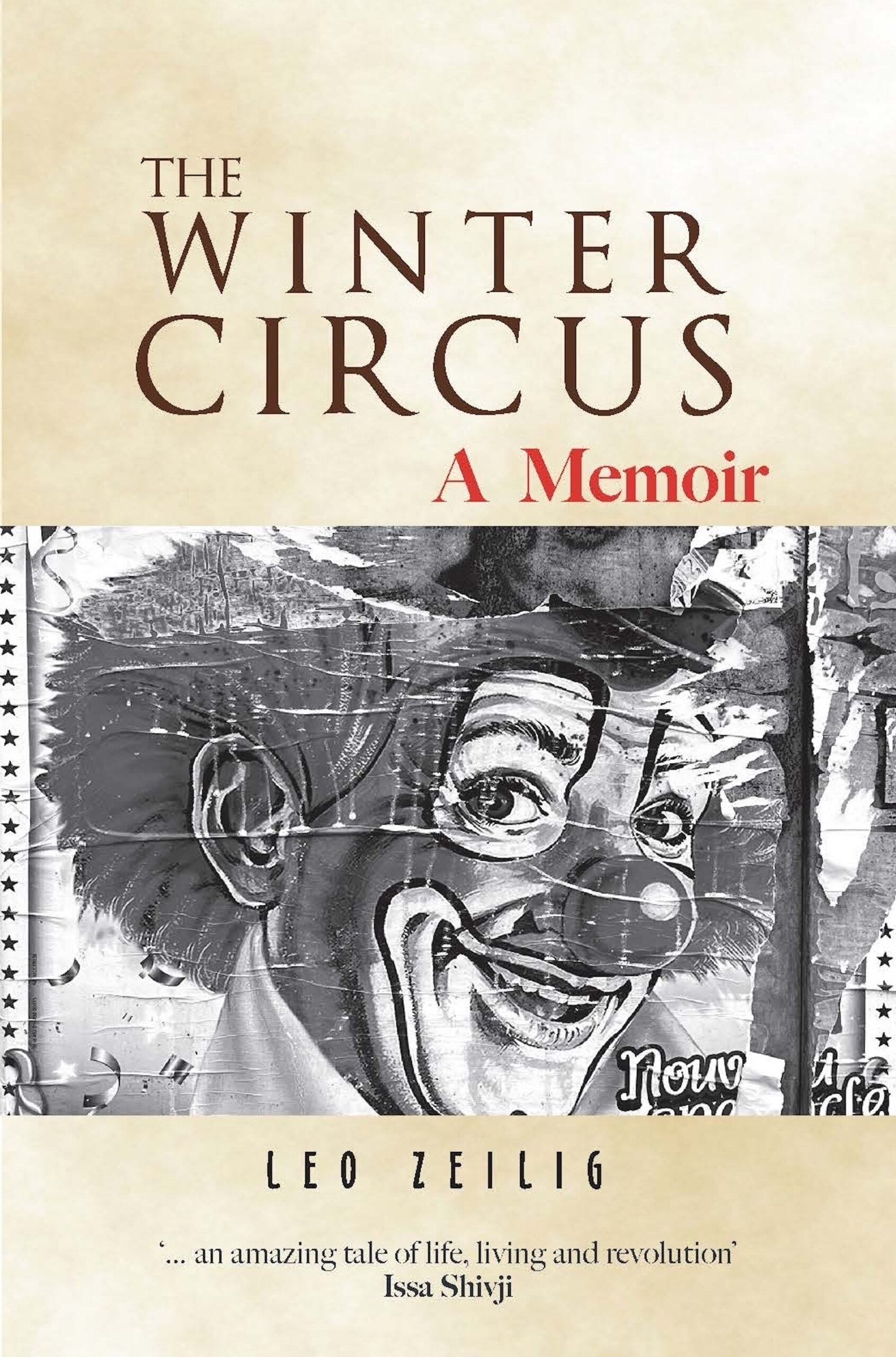
The Winter Circus: A Memoir (2026) by Leo Zeilig is published by the Uganda-based Editor House Facility (EHF). A genre-defying work blending memoir, fiction, and political reflection, it explores what it means to live through personal and global crisis. Moving between intimate experience and wider social forces, it captures a world of deep contradiction: extreme wealth alongside poverty, rising global movements alongside fragmentation. Set across Europe and Africa, it tells of a world on the cusp of radical change.
The story takes place over a weekend in Paris. Four friends, Ivan, Louis, Patrice and Bhaskar travel to the French capital to celebrate a Louis’ 50 th birthday. They encounter a strange political movement gripping the city, with its centre in The Winter Circus, a 19 th century venue in the heart of the city. From here the friends discover a world being transformed by a new politics, led by a woman, Bianca Ndour, from her base in Senegal.
“I let my guard down, nothing to worry me – no fifth sense eyeing the exit; I wormed himself into the scrum holding Ivan aloft, and stretching, raising myself on my toes, searching for my friend’s hand. We locked eyes and laughed, finding something in each other’s face, or in the room, in the circus – inexplicable and glorious. Alive.
Finally, after a few seconds I pulled away and someone else took my place. I left the room, my heart surging, full, convinced. I wanted nothing and let the crowd take me. I felt someone tug on my trousers, a man sitting on the floor in a small group, ‘Join us, brother.’
Automatically I sat down and was handed a paper cup filled to the brim with red wine.
Thoughts started to swirl back into my mind: it was one thing holding a protest, this I understood; but this, this, I thought, was the answer to the old problem. How to maintain engagement, momentum, commitment, after the first spasm of activity. We generate great initiatives in a flurry of involvement, but the central problem, the vital task, is how to sustain action into an entire life-giving revolutionary movement? How do we maintain the inspired frenzy of history when mass energy is being extinguished?
This was the central issue, I thought, looking around, hearing the low simmer of conversation and activity. The group near me had widened their circle to let me in; I was left to my thoughts: How do you prevent a world-changing revolution from collapsing back into inertia?
Bianca knew this better than anyone – ever bigger and better demonstrations until a moment would come with enough people on strike, so the old regime would crumble, and the ruling class would declare the game over. But more was needed.
‘It’s simply not going to happen like that,’ she explained repeatedly to her supporters in the weekly dispatches from Ziguinchor. ‘The rich don’t roll over, accept defeat and then emigrate. They don’t sip whisky, mop their foreheads with purple silk handkerchiefs, button up their Savile Row suits as they contemplate defeat in the morning papers, uttering to themselves, “Sorry, old chap, but the game’s up . . . I’m moving to Monaco.” The game is never up. They must be destroyed, in all of their hideouts.’
‘Friends, it is our movements that crumble,’ Bianca had said, ‘and it is because of this that we must continue to fight even when we think we have won and then on and on until we have cleared every remnant of their side. Everything must fall. Everything must change.’
I nodded to myself; this is what she was doing in Ziguinchor – planning, mapping, organizing, making, sustaining. The point was to drag this thing out.
West Africa the incubator to the new world. Senegal was stretching the canvas of a new social order across the region, and soon the entire continent and world. There were tremendous convulsions of self-organization, village, town and city communes, and new and ingenious industries creating goods to democratically agreed plans without any central authority.
Though there was also the challenge of invasion, the systematic effort to disperse the revolutionary order. I was now deep in thought, running through the plan, as I saw it.
Bianca’s incubator in the Casamance region operated like an old telephone exchange, organizing the supply of goods to Bissau (using the old channels created in the liberation wars in the 1970s), sourcing weapons for Happy Life fighters in Kano, distributing anti-tank weapons to forces in Ouagadougou, and running guns up and down the coast …