
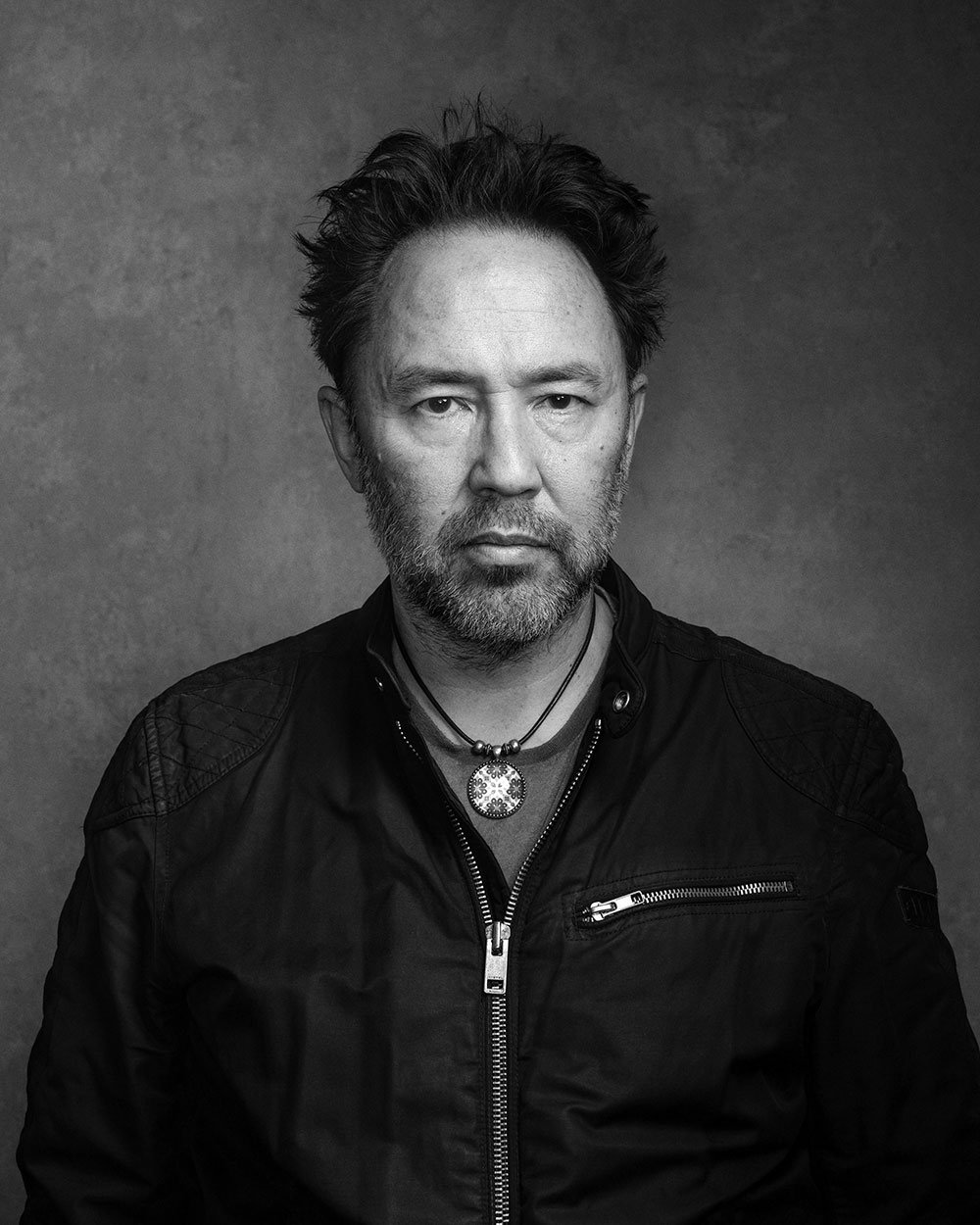
Credit: Ivan Weiss
T
he day I interviewed Daniel York Loh, there was news of anti-immigration protests—some of which turned violent—erupting across Belfast, Northern Ireland. The BBC reported that people had been targeted simply for having “a different skin colour”.
In recent years, xenophobic and racist rhetoric has been on the rise in the UK. This has manifested alongside right-wing politicians and political parties (such as Nigel Farage, leader of Reform UK, and Tommy Robinson, a far-right activist) moving from fringe entities into mainstream influence. For Loh—an actor, writer, and filmmaker of Singaporean and British heritage who has been a vocal supporter of left-wing causes—these developments have been equal parts alarming and maddening.
Based in London, Loh has been working in the performing arts in both the UK and Asia for more than forty years. In that time, he’s become increasingly invested in working to improve Asian representation on stage and on screen. He was a founding member of BEATS (British East and Southeast Asian in Theatre and on Screen), a not-for-profit, volunteer-based advocacy group for British East and Southeast Asians working in theatre, film, or television. He’s also a member of the Race Equality Committee of Equity, the trade union for performers and creatives in the entertainment and performing arts industry. In 2016, he was one of twenty-one contributors to the anthology
The Good Immigrant
, reflecting on issues of race, immigration, identity, and Othering in the UK. A tenth anniversary issue of the book was launched this year.
More recently, Loh appeared in the true crime drama
I Fought The Law
, a four-part series following the determined struggle of Ann Ming—played by the award-winning British actor Sheridan Smith—a former nurse who campaigned for seventeen years to overturn the UK’s double jeopardy law after the murder of her daughter in 1989. Loh stars as Ming’s mixed-race husband, Charlie, in a story that examines grief and trauma, while not shying away from the racial politics of Britain in the 1980s and 1990s.
I’d like to start with
I Fought The Law
, which was based on a true story. It received rave reviews and you were nominated for an award at the 2026 Royal Television Society North East and the Borders Awards. What was it like taking on this role and playing a character based on a real person?
Daniel York Loh with Sheridan Smith in I Fought The Law. Credit: Anastasia A Arsentyeva
Charlie Ming, he was like me. He was mixed race but, essentially, very, very British. Very, very Middlesbrough [a town in North Yorkshire, England]. Ann Ming was kind of an advisor on the series, but [Charlie’s] not around anymore.
I Fought The Law
was based on Ann Ming’s book [
For the Love of Julie
, published in 2009]. It was a real privilege to do it. It was such a good script and an amazing story. Sheridan Smith is an amazing actor and we had a great director [Erik Richter Strand]. I can’t speak highly enough of the whole thing, really.
I got the impression that it resonated with people because, right now, there’s a widespread sense of cynicism in many places. But in the series you have an ordinary person who’s taking on a massive system and prevailing.
I’m told the viewing figures were very high for the modern era. I think people were very taken with [the story]; it was a genuinely huge achievement. Ann Ming kept on going, she was very dogged, which I think people really admire… when you win in the end. If you’re very dogged and you don’t win, they kind of think you’re mad.
How do you feel the series dealt with the issue of racism?
There was a scene that flashed back to when Ann and Charlie were younger, and the racist neighbour comes around and there’s graffiti with racist slurs on the wall outside. And there were a few people online going, “Oh, typical ‘woke’ ITV.” But that’s in her book! It’s in Ann Ming’s book, and it was actually much worse. They suffered terrible racism when they first got together. I wanted that stuff in there. It’s important in social history and it resonates with what’s going on now.
There’s always people who want to blame migrants for anything and everything. If you put one foot out of line, your entire ‘community’—in inverted commas, because people don’t know each other a lot of the time—suffers. It reminds me of my own childhood. My childhood was basically [full of] racist abuse and my dad coming up to the school; the teachers …