
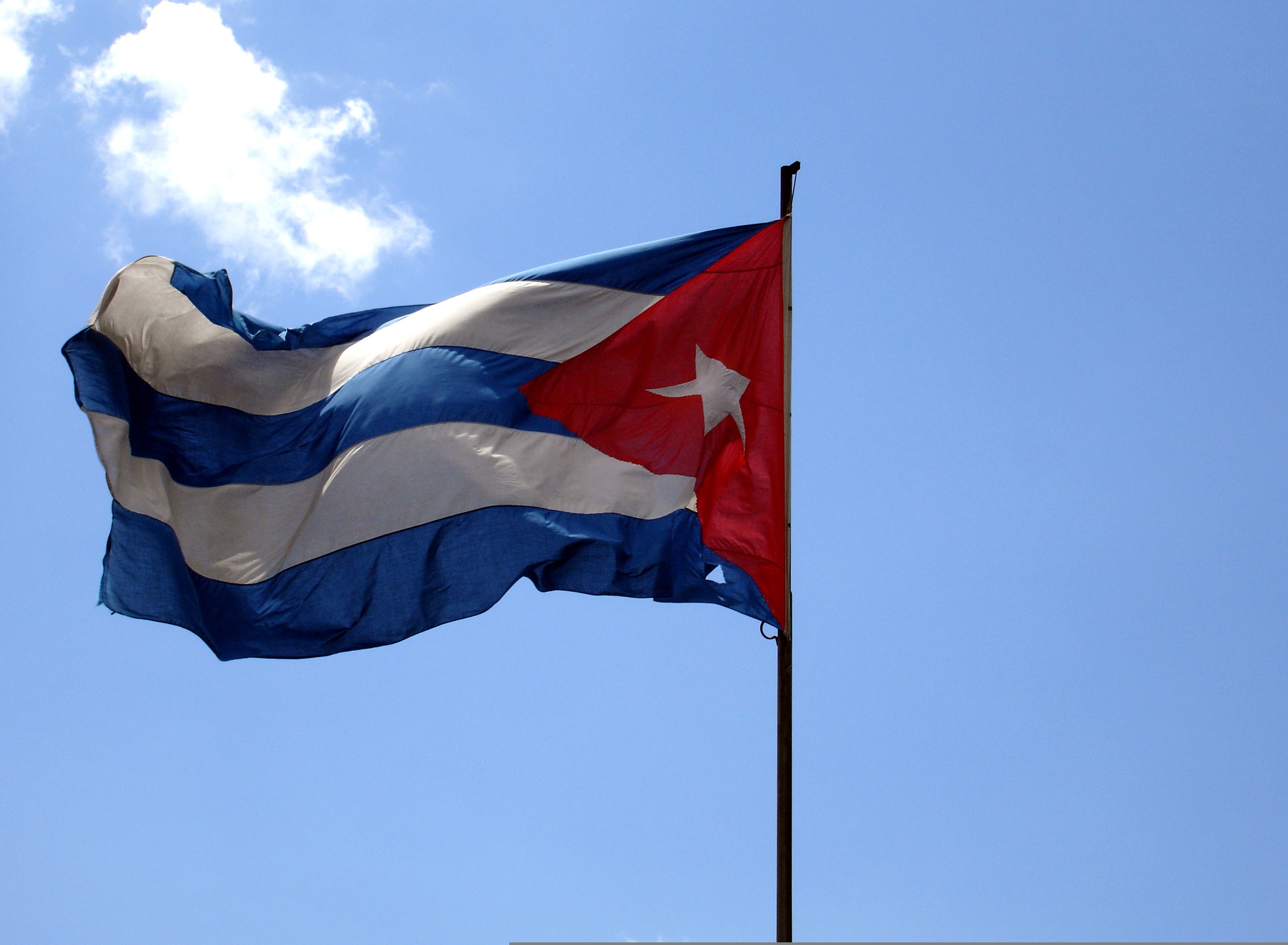
Flag of Cuba (Image from Pixabay)
How a 99-page State Department report reveals the empire’s unending war against a small island’s sovereignty
On July 20, 2026, four days after Marco Rubio convened his “Far Left Terrorism” conference in Washington, the State Department released a 99-page report titled, “ Cuba: The Capital of 21st Century Communism .” For a report that claims to be analysis, it spends 99 pages doing nothing but justifying a blockade, the sanctions, and 67 years of war against a small island. No document better reveals the ideological character of this crusade.
Rubio has built a career on hating Cuba—an island his parents left in 1956, three years before the Revolution. They were not exiles. They were working-class immigrants who built a life in the United States. Rubio invented the exile story anyway, for cheap political gain—a social climber’s success story, now architect of U.S. imperialist counterinsurgency. As Secretary of State, he spearheaded the designation of Cuba as a State Sponsor of Terrorism. The report mirrors the man: it presents itself as rigorous research, but it is counterinsurgency—terror by another name. Rubio and the report are the same impulse dressed in different clothes: delegitimize the Cuban Revolution, criminalize its solidarity with the oppressed, and justify the siege.
The State Department’s narrative: a study in imperial paranoia
The State Department report is a revealing document. Running more than 99 pages, it frames Cuba not as a sovereign nation with legitimate grievances against its powerful neighbor, but as a “campaign against America”—a “revolutionary state” whose “raison d’etre” is “the violent export of communism abroad” and whose “true target…has always been the United States.”
The report’s prose is lurid. It speaks of Cuba’s “sustained campaign of subversion,” its “infiltration” of the U.S. government, its “backing” of “left-wing terrorism on American soil,” and “one of the most durable and damaging foreign intelligence penetrations in American history.” It describes Cuba as a “failed state” with a “chronically failing economy” that nonetheless has “operated at the center of a vast hemispheric network,” training and arming “tens of thousands of left-wing guerillas” and serving as “the premier safe harbor for fugitive American terrorists.”
This is the language of a state intelligence apparatus that has never accepted the legitimacy of the Cuban Revolution. It is the language of the Bay of Pigs, of Operation Mongoose, of the Cuban Missile Crisis, of the Helms-Burton Act, of the blockade, of the 638 assassination attempts against Fidel Castro. It is the language of an empire that cannot tolerate a small island 90 miles from its shores insisting on its own sovereignty.
Guilt by association: the report’s method
The State Department report’s analytical method is guilt by association. It traces the genealogy of left-wing movements in the United States—the Black Panthers, the Weather Underground, the Black Liberation Army, the Venceremos Brigade, the National Lawyers Guild, the Democratic Socialists of America—and attempts to link them all, directly or indirectly, to Cuban influence.
The report’s narrative is that Cuba built a network of “front groups” and “fellow travelers” that have “infiltrated” American institutions, from universities to labor unions to the Democratic Party itself. The Venceremos Brigade, which has brought some 10,000 American activists to Cuba since 1969, is described as “among the most extensive and dangerous infiltration operations ever undertaken by a foreign power against the United States.” The report claims that Cuban intelligence agents “strategically placed” themselves alongside American activists in Cuba, and that the Brigade “served as a screen and tool of the Cuban intelligence apparatus.”
There is, to be sure, a kernel of historical truth here. Cuba did support anti-colonial and anti-imperialist movements around the world. It did provide sanctuary to American radicals fleeing prosecution. It did offer training and ideological support to movements that sought to challenge U.S. power—in Palestine, in Latin America, and elsewhere. The Cuban Revolution was not neutral in the Cold War; it was a revolutionary state that saw itself as part of a global struggle against imperialism.
But the State Department report does not present this history as a clash between imperialism and anti-imperialism—which is what it has always been. It …