
A Georgia court has
ordered a new trial
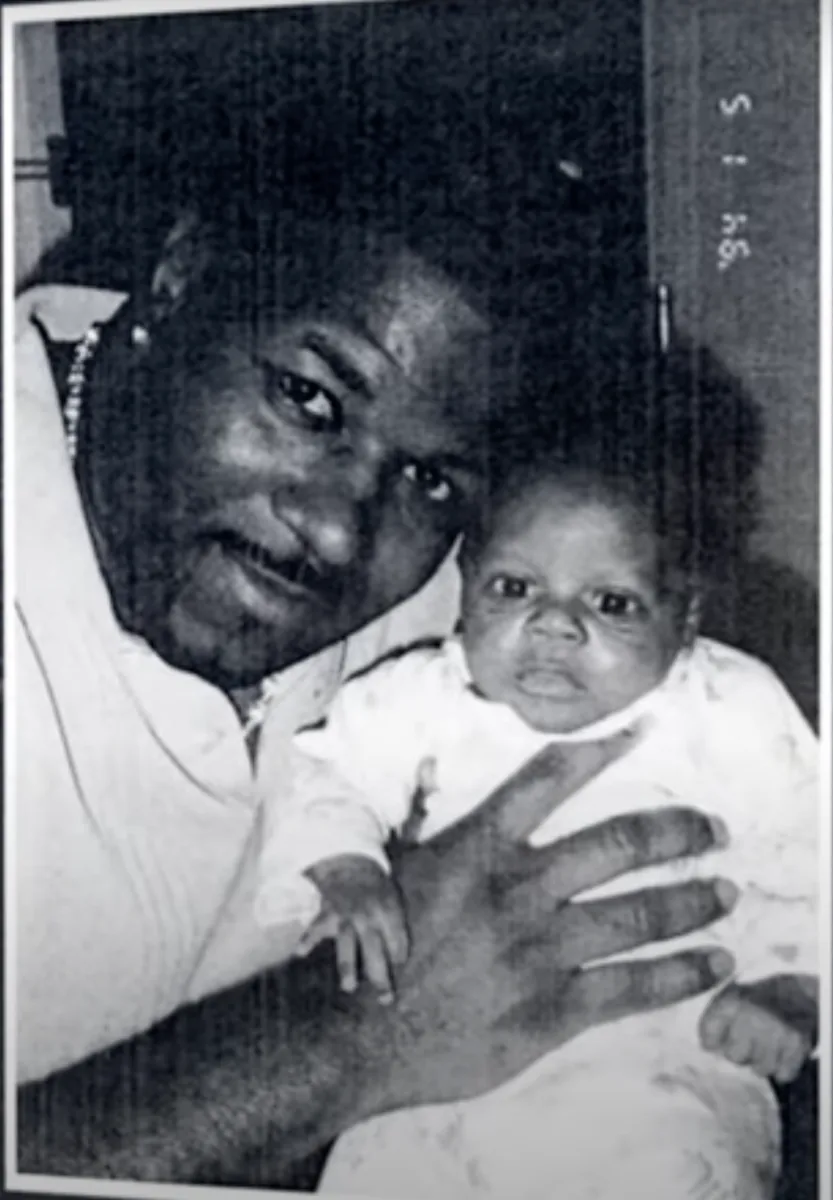
for Danyel Smith, a father who was convicted of killing his two-month-old son, Chandler, more than twenty years ago. Prosecutors relied on a diagnosis of Shaken Baby Syndrome (SBS) to secure his conviction. In recent years, scientific evidence has emerged calling into question the basic assumptions behind the hypothesis.
In her decision, Gwinnett County Superior Court Judge Kimberly A. Gallant ruled that the evolving research into SBS, also known as Abusive Head Trauma (AHT), constitutes new evidence that was not known at the time of trial.
“Mr. Smith’s evidence is not based on historical facts or eyewitness testimony, but on expert analysis grounded in the application of evolving scientific knowledge,” Gallant wrote in
her decision
.
Medical experts for the defense
have concluded
that Chandler was not the victim of abuse.
The defense experts surmise that on the day he fell unconscious, he had a seizure, went into respiratory distress, and stopped breathing. This was at least the second seizure Chandler, who was born five-weeks premature, had experienced, according to Smith’s legal filings. When he was less than two weeks old his mother called 911 and reported that he was breathing strangely and appeared to be having a seizure. The responding paramedics dismissed her concerns. (Smith was not home at the time.)
The expert opinions underlying his motion for a new trial, the judge wrote, “are informed by research advancements in medicine, scientific developments, peer-reviewed literature, and evolving medical standards.”
At the time of Smith’s trial, there was largely a consensus among the scientific and legal communities about the veracity of SBS/AHT. But in the decades since, exonerations and studies have revealed that the so-called
triad of symptoms
associated with SBS/AHT—bleeding around the eyes, bleeding between the skull and brain, and brain swelling—can be caused by strokes, short-distance falls, childbirth trauma, and disease.
What was once considered to be virtually unassailable evidence of abuse is now,
in the words of one New Jersey judge
, increasingly understood to be “akin to ‘junk science.’”
The Appeal in Your Inbox
Subscribe to our newsletters for regular updates, analysis and context straight to your email.
Sign Up
On April 29, 2002, Smith was driving his eight-week-old son, Chandler, to a benefits office so that his partner could apply for food assistance. On the ride over, Smith looked at Chandler when he was stopped at a red light and saw that he was pale and not breathing, according to Smith’s motion for a new trial. Smith’s petition says that in a “frantic phone call” he told his partner that something was wrong with the baby and drove to where she was waiting.
He carried the baby out of the car and Chandler’s mother called 911. Bystanders attempted to perform CPR. When the paramedics arrived, they took Chandler to the hospital.
The next day, a child abuse specialist examined Chandler and concluded that he had been shaken. On May 1, Smith was arrested at the hospital. Less than a week later, his son was taken off life support and died.
“[T]here’s no other explanation that the doctors might look for that would explain these symptoms, other than non-accidental trauma, that is, child abuse,” the prosecutor told the jury during opening arguments at Smith’s trial.
The county medical examiner testified that Chandler’s injuries “are classic and in some cases virtually exclusive for violent shaking.”
Smith maintained his innocence.
“I did not shake my son,” Smith told the jury.
On November 21, 2003, Smith was convicted of felony murder, cruelty to children, and aggravated battery. The judge sentenced him to life in prison.
Smith has never stopped trying to prove his innocence. In 2021, the Southern Center for Human Rights took up his case and began an exhaustive investigation.
In 2021, Smith’s attorneys filed a petition for a new trial, but did not receive an evidentiary hearing until 2024. Prior to the hearing, the Gwinnett County prosecutor’s office
offered Smith a plea deal
. In exchange for pleading guilty, he would get time served and be released from prison, according to Smith’s legal filings. Smith rejected it.
“He’s now served 24 years in prison, that’s half of his life,” Smith’s attorney, Mark Loudon-Brown, told The Appeal. “During that time, he turned down the opportunity to go home simply …