
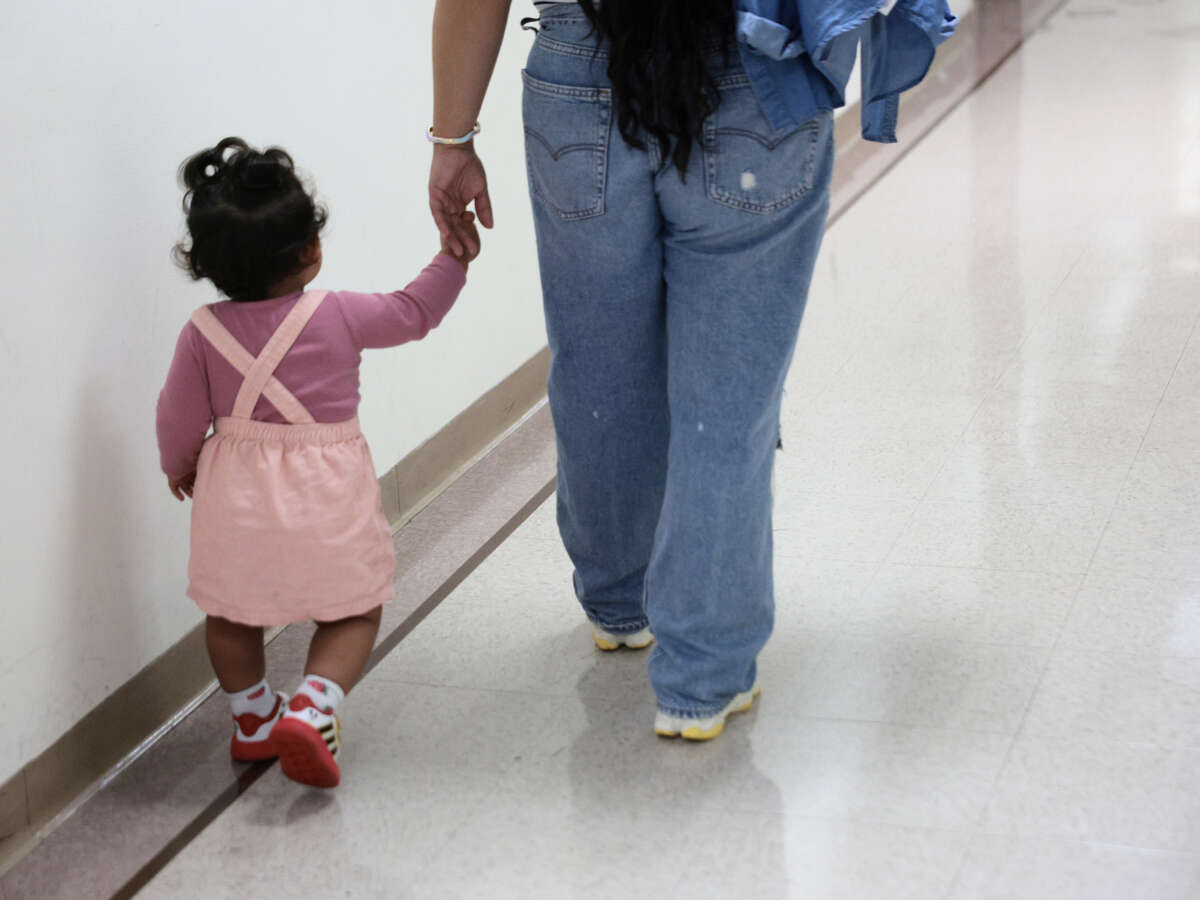
The federal government is withholding funding for legal representation and diverting it to dubious alternatives.
Did you know that Truthout is a nonprofit and independently funded by readers like you? If you value what we do, please support our work with a donation.
As part of its relentless project of mass deportation, the Trump administration has taken particularly brutal aim at the most vulnerable population of immigrants: children. If the federal government has its way, about 20,000 unaccompanied minors will soon face immigration court hearings without legal representation.
For decades, Congress has allocated funding for unaccompanied immigrant minors via the Office of Refugee Resettlement (ORR), as the result of the Flores Settlement, struck after a 1993 Supreme Court decision. That agreement — established in 1997 and still in effect — made it the federal government’s responsibility to ensure that unaccompanied children arriving in the U.S. are treated with a certain baseline of care.
The agreement was cemented under Republican President George W. Bush, who signed a 2008 bipartisan anti-trafficking bill into law and directed the federal government to ensure the care and safety of unaccompanied migrant children, including funding their legal representation.
During his first term, President Donald Trump aggressively targeted this and several other federal programs supporting unaccompanied migrant kids. When Trump took office for a second time in early 2025, he resumed those attacks by ending a contract with Acacia Center for Justice, a Washington, D.C.-based advocacy organization that subcontracts with hundreds of legal advocates to represent children in immigration courts.
“The Trump administration really, from day one, tried to terminate this contract and the ability of children to have their legal rights understood, evaluated, and honored,” said Shaina Aber, Acacia’s executive director, in an interview. She added, “We still don’t have confirmation on what is going to be the government’s plan [going forward] for ensuring that children have the ability to meaningfully participate in their process and have their rights vindicated.”
While the contract termination is being challenged in court, ORR last December refused to reimburse Acacia for services already rendered. This means the organization is more than six months in arrears, unable to pay its subcontractors. “They come up with novel excuses every week for why they are not paying us,” said Aber.
Then, in July 2026, ORR announced it would not pay Acacia until the organization turned over confidential and sensitive data about its clients. According to NBC news, “ORR said it offered Acacia the opportunity to extend the contract if Acacia provides data about its clients and bills ORR when it submits applications for immigration relief.” This undermines the most basic tenet of legal representation: attorney-client privilege, effectively ensuring no lawyer will touch a case unless they want to risk being disbarred.
The Trump administration has also moved to strip funding for local shelters where unaccompanied migrant children are housed, and instead increased funding for migrant jails — such as the notorious Dilley detention center in Texas, where hundreds of children are held in horrific conditions.
Six years ago, an attorney from Colorado who goes by JG*, having had a life-threatening experience with pregnancy, decided to grow her family through fostering. She was granted custody of two unaccompanied minors from Guatemala through Lutheran Family Services. At the time, the two girls were 16 years old and had experienced neglect and abuse. One was found to have been trafficked and the other had survived serious sexual abuse.
“Our girls didn’t speak any English,” explained JG. “They weren’t familiar with any ways of living or the laws in the U.S. They certainly didn’t understand how they could even get any sort of status.” Although JG is an attorney, her specialty is not immigration law and she admitted that the intricacies of immigration law are beyond her expertise. “Had they been in a courtroom all by themselves, speaking Spanish, not English, and having it translated, there’s no way they would’ve understood what was happening,” she said.
When the two girls underwent their immigration proceedings, they were appointed a lawyer through the Rocky Mountain Immigrant Advocacy Network, which is one of Acacia’s subcontractors. Given the abuse and neglect …