
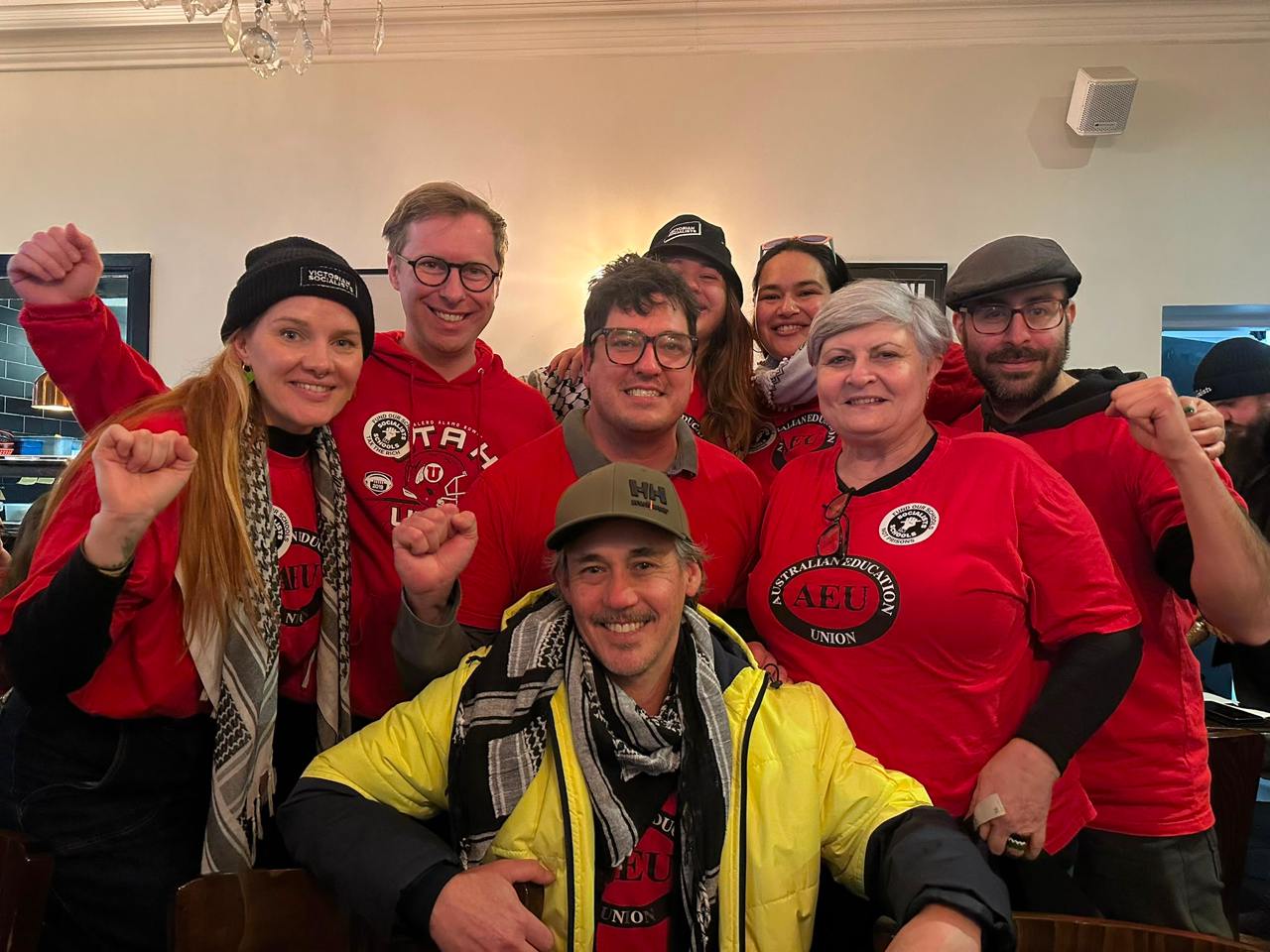
“I’m a rebel teacher running against Ben Carroll in Niddrie because I think workers should run the world. I think teachers know how to run schools, and we should be empowered to run the education system ... On the issue of education, the ALP is not just out of touch: they’re on the other side of the picket line, with the Liberals and One Nation.”
This is how Brendan Laws announced the Victorian “rebel educator” campaign—a group of teachers and education support staff targeting sitting Labor MPs, including Premier and former Minister for Education Ben Carroll.
The eight candidates, all members of Victorian Socialists and the Socialists in Schools union group, have played a role in leading the rank-and-file rebellion in the Australian Education Union (AEU) Victorian Branch that has organised two massive strike days, stared down the state government and fought tooth and nail against the conservative leadership of their own union. The teachers’ fight is the most significant industrial dispute in Victoria in years, with teachers holding the line for a decent contract in the context of falling real wages and deteriorating working conditions. For many on the left, the obstinacy of Victorian Labor in the face of teachers’ demands for decent pay and tolerable working conditions embodies everything wrong with a government which once boasted of running “the most progressive state in the nation”.
Labor has governed Victoria practically uninterrupted for more than two decades, leaning heavily on the support of union members to win successive elections. AEU members were a central part of the mobilisation of 2,200 unionists who doorknocked and phone-banked to hand Daniel Andrews a surprise victory in 2014.
Twelve years on, Victoria has the lowest-funded public schools in the country. The government has stolen $16 billion from the system through underfunding in the last seven years alone. Surging workloads, wage suppression and increasing class sizes have created a situation in which less than a third of teachers plan to stay in the sector long-term.
Leading teacher unionist and Victorian Socialists candidate for Niddrie Brendan Laws says:
“The school I’m working at right now is relatively well resourced, but the sheer amount of work and stress is overwhelming. You’re writing and rewriting assessments, you’re marking, trying to give individual feedback. There’s this pressure, because the school is competing with over-funded private schools ... I was at a very low-income school in Werribee; you could see all the traps that students get pulled into, not having the resources to read and learn, at the same time as [Labor] were spending hundreds of millions of dollars on a nearby youth prison. You would just see the kids that were getting pulled out of school into that constantly. Eight teachers quit from my department during one school year so there weren’t enough staff and everybody else had to pull in just to fill in the gaps.”
The AEU leadership’s close-knit relationship with the Labor government means many educators feel the officials have worked against members’ interests. Workers went backwards after their 2022 contract negotiation, when the AEU leadership rushed through a sell-out deal cutting real wages by 11 percent. Forty percent of AEU members voted against the offer, at the time a historically unprecedented rejection of a leadership decision in the union. While many left the union in disgust, others waited, and pledged that next time around it would be different
Brendan was one of around a dozen Victorian Socialists members who decided to launch Socialists in Schools in mid-2025. “The biggest indicator that there was an audience for it was how many AEU members were already part of Victorian Socialists”, he says. “We took a survey and found we had almost 100 teacher members, so it just showed that there was already a base to work with.”
The campaign started with the modest aim of giving socialist teachers a chance to get together and chat:
“The first part was just meeting up and discussing socialist politics with the people in our campaign. It was the political arguments around militarism, the genocide in Palestine, the Labor government’s austerity and privatisation. Then when we knew that our last agreement was going to expire and the opportunity to have industrial action was going to be there, we really shifted a lot of our propaganda to educate people about striking. It had been 13 years since a strike had …