“It’s not just about what’s happening in Palestine, it’s happening everywhere. The same forces that are controlling the world, the capitalist and imperialist forces, they are the ones who started the war in Sudan, and they are the ones waging wars in communities in every country in the world, like in Congo and Turtle Island, and Cuba and Venezuela,” Ahmed Sarsour tells me.
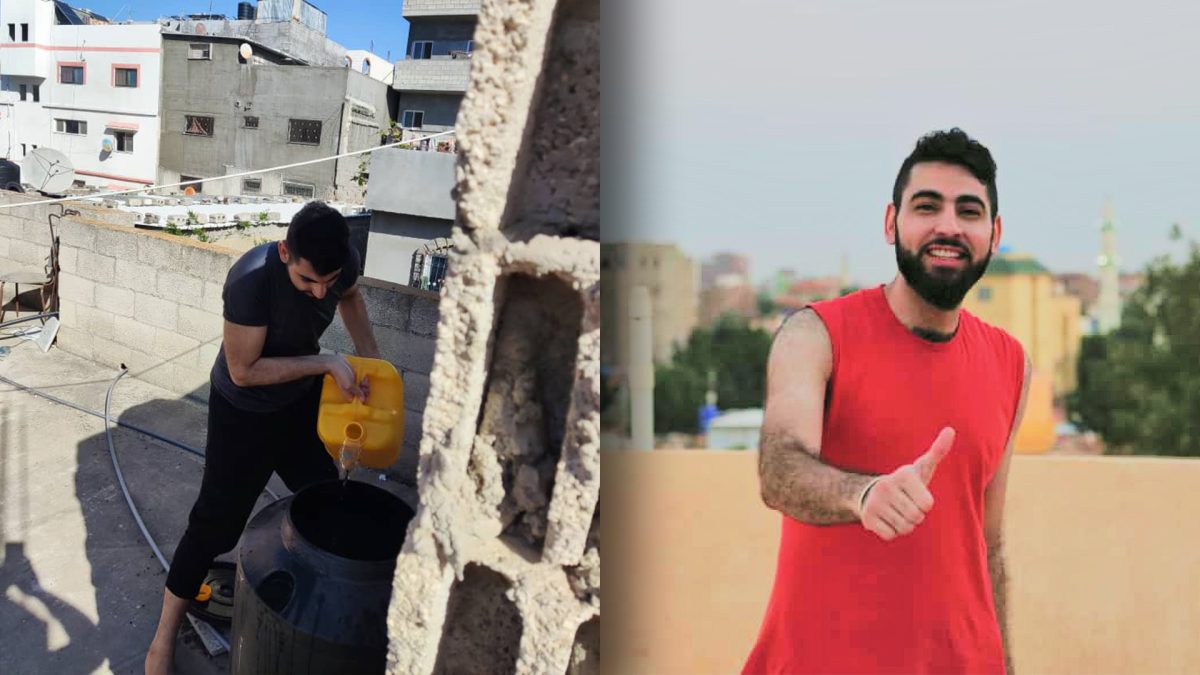
It’s the afternoon of Friday, June 26, and Sarsour is struggling to stay on the call amid interruptions in electricity. The 33-year-old Palestinian poet is speaking to Unicorn Riot from his birthplace, his grandparents’ home in the center of Gaza in the city of Deir Al-Balah. Shaken but still standing after three separate bombings, the house sits adjacent to rubble from their neighbors’ former home. The local mosque has also been destroyed.
“The Internet is not stable, there’s just a local vendor here in the Gaza Strip — and we are dependent on it because there hasn’t been electricity in Gaza since the seventh of October,” Sarsour says.
On October 7, 2023, Israel declared war, launching an attack on Gaza that has left the majority of Gaza’s 2.3 million people displaced. According to the official numbers reported nearly 75,000 Palestinians have been killed while researchers find the total could be fifty percent higher with a death toll surpassing 100,000 .
Unicorn Riot coverage from the frontlines in Gaza and Palestine
During our conversation, Sarsour mentions October 7 repeatedly, always to assert that “the genocide” didn’t begin that day.
Sarsour was born in Palestine to a gynecologist father and pharmacist mother. When he was nine, he and his four siblings followed their parents to Sudan. It was only supposed to be for a few years, while his father finished his studies, but the family decided to stay because for them Sudan represented “the best shot to have a better life, a good life.” As Sarsour explains, “Gaza has always been this rough.”
During this time, all the Sarsour children earned their degrees; the two brothers became engineers, and their sisters doctors.
Unfortunately, though, after two decades the family was forced to return to Palestine, “fleeing the war” in Sudan that started April 2023. “We tried to hold our ground and stay there because we built a life for almost 20 years there. We had everything there, and we left everything behind,” Sarsour tells me. “And we actually fled a war to get trapped in another genocide.”
Related: ‘Zaghrouda’ in the Midst of the Sudan War
When Sarsour first returned to Palestine, he focused on his family’s survival. Friends from Sudan contacted him in February 2024, asking why he hadn’t left. But he’d only recently returned, and the family couldn’t afford to leave. So, his friends started a GoFundMe page for the Sarsours — and, at least initially, the poet Sarsour was hopeful.
Social media users were calling Palestinians with fundraisers spammers and “profiteers who are trying to scam people.” So, Sarsour decided, “I need to put a face to the campaign.”
This is when, overcoming social anxiety, Sarsour took to social media in hopes of connecting with activists and influencers online, at which point he says he “started seeing the news.” And this is when he decided poetry was the way he’d respond.
“I had been seeing what’s happening in the north, what’s happening in the south, and it broke my heart, seeing all of these people getting murdered, and getting amputated, and no one cares about them… And they were recording themselves to the outside world to see, and yet people were calling them liars.”
“They always claim that these are Hamas members or terrorists, but even after the claimed ceasefire, these targets have been intensified,” he says. “And they are trying to target people during the most uncommon times, when they don’t expect it… During weddings, or festivities, or in the markets.”
Another example, Sarsour adds, is the targeting of fishermen — because “they don’t want Gazans to have any reliable source of food.”
Before returning to Palestine, Sarsour had written poems about the wars there “in 2012, 2014, 2018 and 2020, and all the other wars they waged in Gaza.” He’d written in his native language, Arabic, from his home in Sudan. And then for five years he didn’t write at all, feeling “really betrayed because no one cares, no one is listening.”
Coming “face to face” with the destruction is what made him realize, “It is my destiny to get reconnected with what I had started a long …