
Spontaneous Resistance in the Lagers
Lager-time, Despondency, and Timelessness
Anarchy-nihilism, progressivism & futurity
Anarcho-Nihilist Critique of Organizations
Anarcho-Nihilism and Informal Organizing
“In writing an overview of both anarcho-nihilist thought and concentration camp resistance, I have omitted much. The nihilist themes of negation, time, and organization could have happily been joined by conversations about identity abolishment, queerness, domestication, and more. Stories of Häftlinge who lashed back against the camp systems could have been elaborated by countless stories of escape, mutual aid, and nonviolent civil disobedience, all of which played a part in the broader story of resistance in the Lagers. There are many questions and topics that still remain unexplored for me.”
Serafinski, Afterthought from Blessed is the Flame
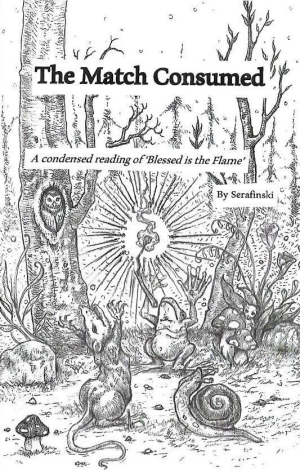
A few months ago a comrade & I decided to take on the task of creating a condensed version of Blessed is the Flame. This was in response to a vast misunderstanding & fash jacketing of those who post content on nihilist thought.
This task turned out to be more difficult than we imagined. Condensing 50+ pages wasn’t easy, at times it felt wrong to even omit some of the passages/stories from the book. On a particular night of working on this project the question came up of whether or not this was a disservice to all the people who’s stories were told in the book. But we found solace in the ‘Afterthoughts’.
There will never be enough paper to document all the stories of those who were imprisoned in the camps. Many of them are still relatively unknown & majority of the ones that are, ended in tragedy. Most of the prisoners who resisted were met with swift death. So knowing all the tragedy and suffering that happened — how did this book become so important to us?
Enough for us to spend months trying to compile a shorter read for people to have access to?
Blessed was our introduction to nihilist resistance. On a summer morning in the middle of the desert it became a sacred text to us. We poured over the pages, read & re read each section — the stories lit a fire under us. When you pick this up its our hope that you may be consumed by that same fire.
“I find it comforting that everything is so hopeless”
We are being led to our slaughter. This has been theorized in a thousand ways, described in environmental, social, and political terms, it has been prophesied, abstracted, and narrated in real time, and still we are unsure of what to do with it. The underlying point is that the progressity of society has nothing to offer us and everything to take away. Often it feels like we are giving it away without a fight: when we sell our time for money, allow our passions to be commodified, invest ourselves in the betterment of society, or sustain ourselves on the spoils of ecological destruction, we openly (though not consensually) participate in our own destruction.
The question hangs in an ethereal and ghastly voice: Why do you let yourselves be led to the slaughter like sheep?
Underneath the ubiquitous sheep-to-the-slaughter metaphor is buried a profound historical possibility: wherever the Nazis sought to impose domination and violence, people resisted. Behind the images of people wearing armbands, boarding trains, and walking placidly into gas chambers, lies a rich history of recalcitrance’ and insurrection.
A different approach: We have already been led to our slaughter — it is all around us. The world in which we exist is a protracted death, a sort of economically-sustained limbo in which hearts are permitted to beat only to the extent that they can facilitate the upward stream of capital. The plague of domestication has reached into every wild space, and the lines of colonization have crossed us more times than we can count. Every unproductive aspect of the biosphere has been flagged for eradication, from the “beam-trawled ocean floors” to the “dynamited reefs” to the “hollowed-out mountains,”’ the highest calibers of technology are locked into a perpetual killing spree chugging along In a “monotonous rhythm of death.” We who still have air in our lungs are the living dead, and struggle daily to remember what it feels like to be alive, holding tightly to the “desire for wildness that the misery of a paycheck cannot allay.” We roam the desolate architecture of our slaughter houses (“the prison of civilization we live in”) like ghosts who feel but cannot quite understand …