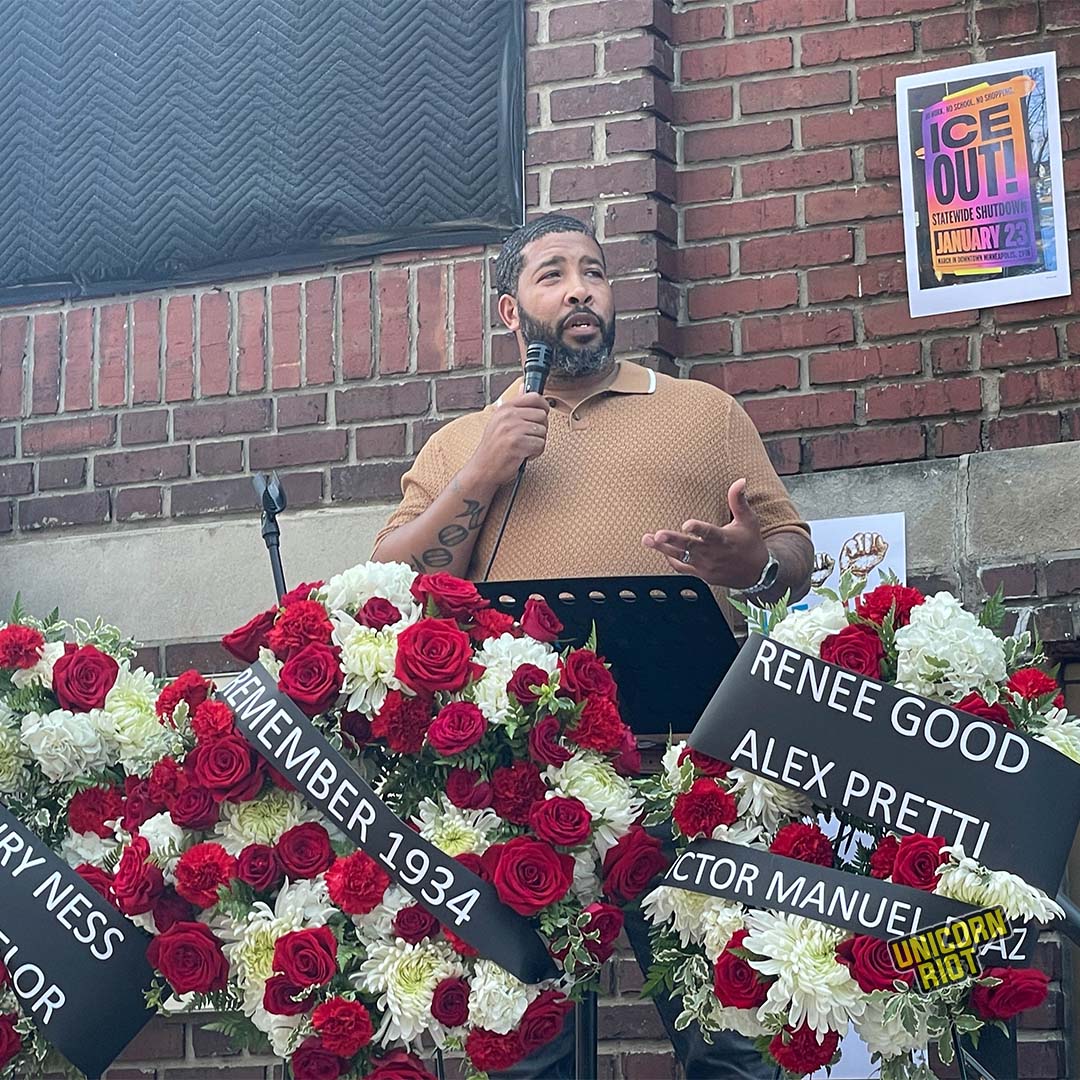
Minneapolis, MN — On July 19, labor activists and organizers held an annual memorial commemorating workers who died during the Minneapolis truckers strike of 1934. It marked the 92nd anniversary of “Bloody Friday” in which two unarmed strikers were killed and 67 others shot after local police opened fire on demonstrators at the intersection of North 7th Street and 3rd Avenue in downtown Minneapolis.
Four days later over 100,000 people flooded the streets during the funeral procession of the two slain workers, Henry Ness and John Belor. This quickly became a rallying cry not just for local truck drivers but for a burgeoning national labor movement demanding better pay and improved safety conditions across the board.
Increased pressure from a strong local and national union movement forced Minnesota’s business owners — then represented by the notorious anti-union Citizens Alliance — to concede to the strikers demands. It was a huge victory not only for Minnesota unions but for the entire national labor movement leading to overall improved working conditions and enshrining the legal right for workers to organize on the job floor.
Despite record breaking heat, and simultaneous competing events in the World Cup final and the Minneapolis Aquatennial, dozens of people came to the event to pay their respects.
Per tradition the commemoration was officially put on by Remember 1934 — a local collective that “organizes regular gatherings of social justice and labor activists, union members and strike descendants to celebrate the event and it’s relevance in current issues.” It was also sponsored by a number of activist and labor groups, not least of which included the Teamsters — one of the largest unions in the U.S — that was responsible for organizing the strike nearly a century ago.
Teamsters Local 638 President Scott Wilkie elaborated on the national importance of the strike highlighting how Minnesota continues to be a leading example to the rest of the nation.
“Whether it was being the first state to send troops to the union during the American Civil War, whether it was standing up to union busting in the 1930s and creating the NLRB and NLRA, whether it was the birthplace of the American Indian Movement, codifying abortion rights, paid medical leave or showing the rest of the country how to kick ICE the fuck out your city […] it’s the same fight,” Wilkie said.
Max Graves, an organizer with the End Slavery Minnesota Coalition also drew parallels between the labor struggles in 1934 with current struggles in the American prison system.
Poor working conditions at Minnesota’s prisons have led advocates to push for legal reforms, and or the total abolition of the prison labor system in the U.S. As such, the End Slavery Coalition has introduced a package of proposed bills which would officially classify prison laborers as employees thereby “ granting them basic workers’ rights including federal minimum wage. “
“When I think of 1934 I can’t help but think of the abuse of power from local law enforcement over the worker. Our movement is centered around the 1863 emancipation proclamation which stopped slavery based on the color of your skin but opened up a loophole that was upon conviction, to get the worker back on the plantation.” Max Graves, End Slavery Coalition organizer
In the aftermath of the ’34 strike, Minnesota’s local business community attempted to bury this history and overshadow the annual Teamster picnics by creating their own rival event on the same day as Bloody Friday. This event is known as the Minneapolis Aquatennial , which was started in 1940 and continues to the current day.
Minnesota Immigrant Rights Action Committee (MIRAC) organizer Yann Chenn took direct aim at the companies involved in this apparent attempt at historical revisionism, including “companies like Xcel Energy, Subway, Target and Kemps, shame on you!” said Chenn.
Shen also drew striking similarities between the police killings in 1934 to now adding, “Police attacking unarmed civilians isn’t new to this country. The history of law enforcement in the United States is inextricably tied to the enforcement of slavery, the forced assimilation and genocide of Indigenous people, strike breaking and union busting.”
Despite the somber tone, the event ended on a celebratory note as the activist band Brass Solidarity led the crowd a short distance in cheerful song and dance to the spot of the killings, to lay a wreath in dedication to the …