
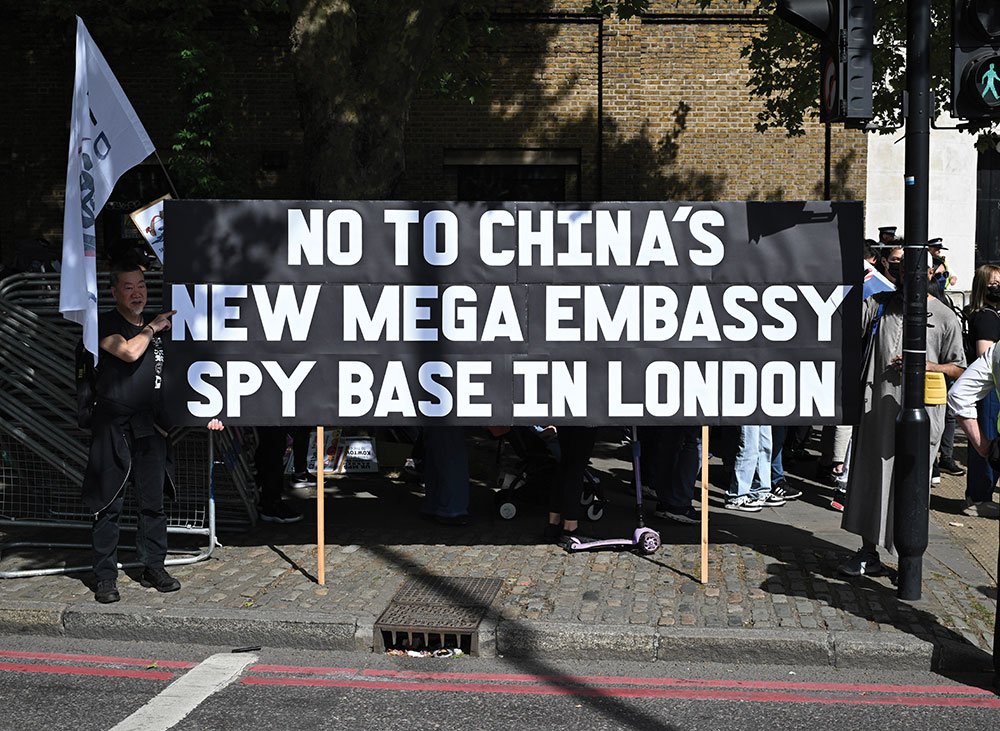
Protests against the Chinese mega-embassy in London. Credit: Monkey Butler Images
F
ace covered, recognisable features hidden. A back-up phone in hand, location services disabled. No recent travel plans. No recent contact with family members in Tibet. Avoid cameras. Avoid interviews. At political protests against the Chinese government, including recent demonstrations against the planned Chinese mega-embassy in London, some Tibetan participants arrive with these calculations already made.
Not everyone takes the same precautions, but everyone understands the necessity. Visibility travels, particularly for Tibetans. A single photograph, name, or online post can instantly cross borders, reaching far beyond the crowd standing on a London street.
This landscape of fear has recently gained a physical anchor. In January 2026, the UK government approved China’s plan to redevelop the Royal Mint Court in central London into its largest diplomatic mission in Europe. The plan has faced sustained opposition from local residents, campaign groups, and politicians, who have raised concerns over national security, surveillance, protest safety, and the impact on surrounding areas.
To read the rest of this article, and to access all
Mekong Review
content, please
subscribe
. If you are an existing subscriber, please
login to your account
to continue reading.
The post
The cost of visibility
Nathalie Chi
appeared first on
Mekong Review
.