
Trump’s administration omitted microplastics from a list of pollutants for local utilities to monitor in drinking water.
Truthout is a vital news source and a living history of political struggle. If you think our work is valuable, support us with a donation of any size.
If you’ve ever looked at a disposable bottle of water with suspicion before tossing it into a bin, you’re far from alone. On August 8, leading scientists across globe published an editorial in The Lancet warning there is “strong evidence” that plastics harm human health and natural ecosystems at every stage of production and consumption — from fracking for the fossil fuels used to make plastics, to the microplastics leaching into our bodies and the environment. Plastic waste is projected to triple by 2060 if governments fail to act.
Much of that harm is traced back to more than 16,000 chemicals used in plastic production. Hazardous plastic chemicals include known carcinogens, neurotoxicants, and endocrine disruptors such as phthalates, bisphenols, brominated flame retardants, and per- and polyfluoroalkyl substances (PFAS), a class of highly persistence chemicals linked to a range of health harms, according to The Lancet.
Defined as pieces of plastic less than five millimeters in size, microplastics break down into even smaller nanoplastics that are invisible to the naked eye and notoriously efficient at carrying harmful chemicals into the internal organs of humans and animals. Microplastics also do not go away over time, and their release into the environment could double globally by 2040 unless current levels of pollution are reduced.
According to The Lancet, “microplastics and nanoplastics are everywhere,” from the depths of the ocean to the Arctic, in Himalayan glaciers, and in the air, food, and drinking water people consume daily. Most recently, studies have found microplastics in human lungs and fecal matter, suggesting exposure through inhalation and food, as well as in blood, carotid arteries, hearts, brains, livers, ovaries, and testes, in addition to placentas attached to fetuses.
Alarmingly, drinking water is one of top pathways of exposure to microplastics, and research suggests that tap water in United States has the some of the highest concentrations in the world. Plastic pollution enters the water system in myriad ways; in 2026 alone, volunteers removed more than 1 million plastic pellets released by various industries into rivers, streams, and lakes across 31 states and several foreign countries. Conventional water treatment systems serving most communities cannot completely remove microplastics.
However, opponents of plastic pollution say the Trump administration has effectively delayed nationwide monitoring for microplastics in tap water for at least five years. Without a nationwide monitoring program, scientists and policy makers will struggle to grasp the scope of microplastic contamination and communicate with the public about health risks, according to Trisha Vaidyanathan, the science director at Beyond Plastics.
Drinking water is one of top pathways of exposure to microplastics, and research suggests that tap water in United States has the some of the highest concentrations in the world.
“Policy doesn’t really need to wait for research to be 100 percent figured out. You can take precautionary action,” Vaidyanathan said in an interview. “We already have lots of evidence about the harms of plastics, especially from the chemical perspective, so we don’t need to wait for research to continue. We know enough now to take action to protect public health.”
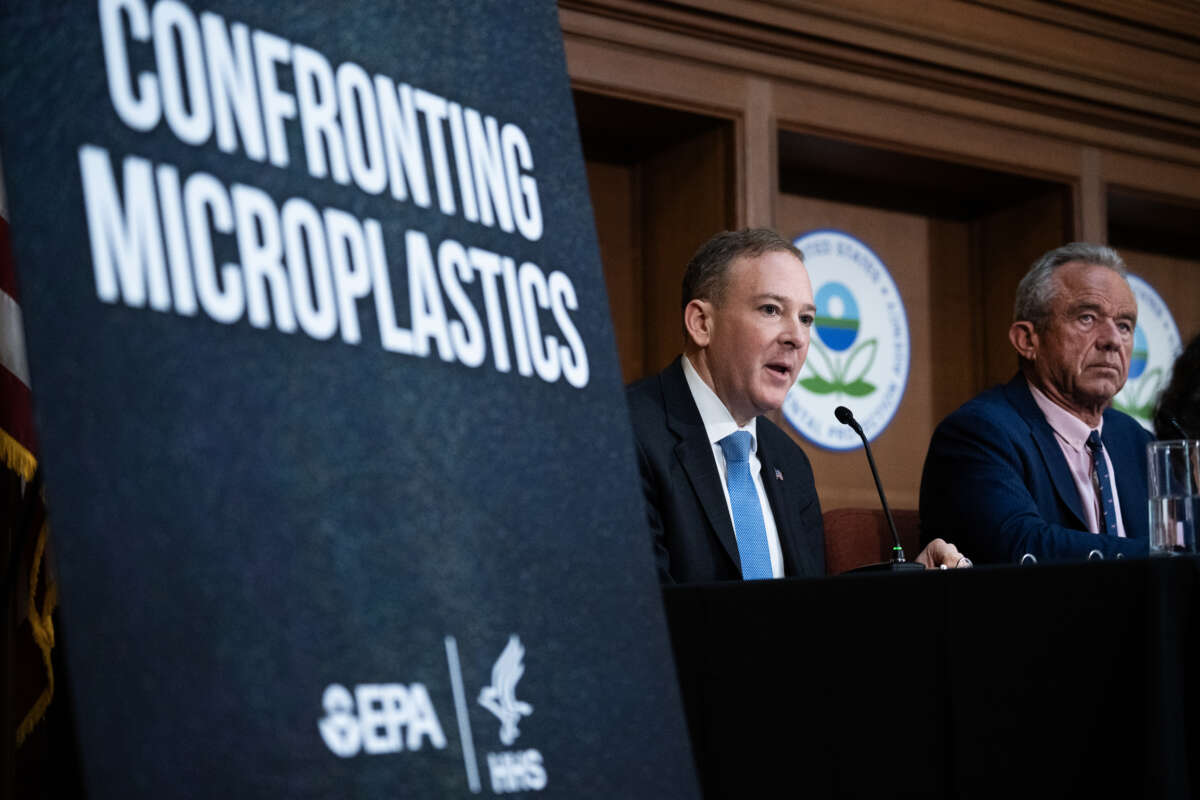
In April, Health Secretary Robert F. Kennedy Jr. joined Environmental Protection Agency (EPA) Administrator Lee Zeldin to announce “landmark, coordinated actions” to address microplastic contamination, including a $144 million research project focused on identifying microplastics inside individual human bodies. The EPA also placed microplastics on its draft Contaminant Candidate List, which is published every five years to identify pollutants in drinking water that are not currently regulated but may need to be in the future.
Public health groups applauded the move but cautioned that including microplastics as a candidate for regulation is no replacement for actually developing and enforcing clear drinking water standards. In November 2025, before those changes, the governors of seven states — New Jersey, Delaware, Illinois, Maryland, Michigan, Wisconsin, and Connecticut …